What is the role of polyimide in flexible PCBs?
role of polyimide in flexible PCBs
The remarkable pliability and physical durability of polyimide make it an essential material for the fabrication of flexible PCBs. Its versatile design capabilities foster innovation across a range of industries, from consumer electronics and wearables to aerospace and automotive technology.
Polyimide-based flexible pcb boast exceptional thermal stability, and can function seamlessly over a wide temperature range. They also display outstanding chemical stability, allowing them to resist exposure to corrosive chemicals without degradation. This characteristic proves crucial in industries like aviation and aerospace, where equipment operates under arduous conditions, and reliability is paramount.
In addition to these electrical properties, polyimide has a high dielectric strength, which helps ensure the integrity of circuit boards. The insulating properties of the material allow it to effectively block out external interference, and prevent short circuits and electrical failures. Its superior insulation properties also allow for reliable performance over a range of frequencies, making it suitable for use in sophisticated electronic applications.
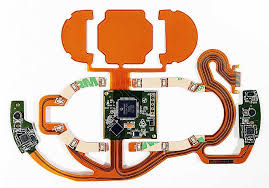
What is the role of polyimide in flexible PCBs?
Aside from its flexibility, polyimide possesses formidable tensile strength, making it capable of withstanding the rigors of harsh environmental conditions and mechanical stress. This robustness makes it a preferred choice for circuits that must withstand prolonged contact with chemicals and abrasive materials.
Depending on your project’s specific requirements, you can choose from several different types of polyimide substrates. Among these are UL-94 V0 low-flow PI, Kapton HN and HA, and low-bend HA. Low-flow PI has been developed to limit the flow of heat and oxygen during manufacturing, which increases its rigidity and thermal stability. Kapton HN and HA are both low-bend PI, with Kapton being more rigid than HA. Low-bend HA has been developed to reduce the risk of cracks and delamination, and is a popular option for high-density flex circuits.
The conductive patterns of the circuit board are printed onto the polyimide substrate using techniques like screen printing or inkjet. The etching process is then used to chemically remove the excess conductive material, leaving behind the desired circuit traces. The layers of the circuit are then bonded together with the appropriate adhesives, and holes and vias are created to interconnect the various circuit components. The completed flex circuit is then inspected for flaws and defects before being subjected to rigorous testing and quality assurance procedures.
The production of flexible PCBs involves a series of intricate processes that differ from those used in manufacturing rigid boards. One of the key challenges in manufacturing flexible PCBs is ensuring that the board can withstand repeated bending and flexing without suffering from mechanical failure or degradation of the conductive traces. This requires careful selection of materials and precise control over the manufacturing process.
As the need for innovative electronic components continues to grow, engineers are constantly exploring new ways to harness the unique properties of polyimide for a variety of diverse industries. Polyimide is continuously evolving to meet these demands, resulting in advanced technology that enhances the functionality and durability of consumer electronics, IoT devices, medical equipment, and robotics.