What Testing Services Does a Flex PCB Manufacturer Provide?
Testing Services Does a Flex PCB Manufacturer Provide
A flex PCB manufacturer provides testing services to ensure that the final product meets its specifications. They use appropriate software to detect any issues that may affect the integrity and functionality of the circuit board. For example, if they notice a pattern of shorts or openings in the circuit board, they can use a variety of methods to fix these problems and prevent future failures.
These tools include the use of specific software, automated test equipment and manual inspections. They may also employ custom customer-required testing procedures to provide additional peace of mind for their customers. This can help ensure that the finished product will be able to withstand the environmental conditions in which it will be used.
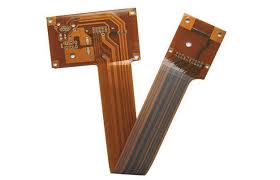
Unlike traditional rigid PCBs, flex circuits are made of flexible base materials that are more resistant to vibration and shock. These durable characteristics make them a great choice for applications that require movement or exposure to harsh environments. Moreover, they can withstand high temperatures and varying humidity levels. Consequently, flex circuits offer a number of benefits, such as reducing costs, facilitating assembly, and eliminating the need for external connectors.
What Testing Services Does a Flex PCB Manufacturer Provide?
In addition, a flex pcb manufacturer can be molded into a particular shape to fit the product in which it will be installed. This feature makes it ideal for devices such as medical instruments, mobile phones, and electronic toys. Furthermore, flex circuits are extremely lightweight and can be bended, creased, and folded without compromising their functionality.
To maximize the reliability of a flex circuit, it is necessary to design it with proper impedance control and layer stackup. This will help ensure that the circuit board is able to transmit signals at a high speed without any loss or distortion. This can be achieved through proper design of the copper, dielectric, and adhesive layers.
Another important factor that a flex pcb manufacturer considers is the ability to perform various tests on the finished product. For example, they might use an AOI (Automated Optical Inspection) machine to scan the entire surface of the PCB to check for any defects or errors. Likewise, they might conduct a thermal test to ensure that the flex circuit is able to withstand extreme temperature fluctuations.
The first step in creating a flex PCB is to fabricate the FCCL (foil-coated copper laminate). The next step is to cut out the flex circuits from this foil. This process is known as blanking and requires a hydraulic punch and die set, which involves a relatively high tooling cost. This process is typically used for prototypes and low-volume production runs. For larger production runs, a rotary press or an electroplating system is usually employed.
After the blanking, the flex circuits can be bonded to each other using pressure-sensitive adhesives (PSA). This material is applied by removing a protective liner and pressing the circuit into it. Then the circuits can be etched, drilled with positioning holes, and finally electrically tested. In order to ensure the quality of a flex PCB, it is important to select a manufacturer that provides all these services.