What materials are used in flexible PCB boards?
materials are used in flexible PCB boards
The key component of a flexible printed circuit board is copper, which represents the electrical conductors. Copper is available in different weights, with 0.5oz and 1oz copper being the most popular choices for flexible circuits. The copper conductors are then patterned using lithographic processes to produce the necessary conductive paths or traces. The flex circuit is then constructed by laminating the copper foil to an appropriate substrate material. The underlying substrate can be made from polyimide film, polyester (PET), or thin flexible-epoxy or glass fiber cores.
Polyimide (PI) and PET are the most common flex PCB substrate materials. These materials offer good thermal stability and superior mechanical properties. They are also flame resistant and chemically resistant, making them ideal for demanding applications. PI is more expensive than polyester, but it offers superior mechanical and thermal properties. Alternatively, a two-layer Copper-Clad Laminate (CCL) can replace the copper foil and eliminate the need for adhesives, providing superior electrical performance.
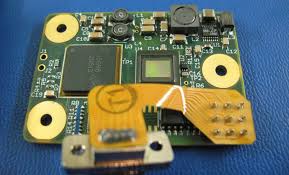
A flexible pcb board is composed of multiple layers of these flexible base materials, and the copper layer is the key element for conducting current throughout the circuit. The copper foil can be either rolled and annealed or electro deposited. The former has a columnar structure, which is easily accessible for roughening and etching processing. The latter has a fish scale shape, which is more difficult to treat and inaccessible for roughening or etching processing.
What materials are used in flexible PCB boards?
The copper layer is then connected to the underlying substrate through holes called vias. Generally, the diameter of the via is bigger than the width of the connecting copper traces to reduce the chances of stress concentration spots in the connectors. The connections can be teardrop or annular rings.
To protect the conductor pattern and prevent oxidation, a solder mask is applied to the surface. A protective coating can also be added to the flex PCB, such as photo-imaged dry films or liquid photo-imaged polymers. Lastly, the finished flexible circuit boards are inspected and packaged for shipment.
Innovations like laser direct imaging and roll-to-roll lamination have refined the manufacturing process of flex circuits. These innovations help improve trace patterning accuracy, which is essential for dense designs, and make it possible to create conductive inks that allow flex circuits to be made even on very flexible substrates. In addition, the use of a flex core can reduce wrinkling in the conductor pattern and enable higher layer counts.
A stiffener is a rigid material added to the flex PCB to increase its strength and rigidity in specific locations. Depending on the design, stiffeners can boost structural integrity, reduce weight imbalance, and enhance heat dissipation. They can be made of FR4, Kapton, or a variety of other materials. In addition, they can be adhesive-less or adhered with acrylic thermally cured adhesives. They can also be etched or chemically treated to resist corrosion and improve performance. The use of stiffeners can also aid in reducing the number of flexes needed to meet the circuit’s bend requirements.