How Flexible Printed Circuit Manufacturers Innovate in Their Field
Flexible Printed Circuit Manufacturers
Flexible printed circuit manufacturers are instrumental in pushing the boundaries of what is possible in modern electronics. Their advanced technology has been pivotal in the development of sleek and sophisticated devices like smartphones, wearable gadgets, and advanced medical equipment. The innate adaptability of these circuits allows them to bend and fold as they need to during use, eliminating issues with size and space constraints.
Flexible PCBs are made from malleable, durable plastic substrates that can be shaped into a variety of thicknesses and radii. They also offer unparalleled flexibility in design, making them ideal for applications that require complex three-dimensional configurations.
Flex PCBs can be manufactured in a number of ways, from single- or double-sided designs to multilayer boards. In addition, they can be produced using a wide range of materials. For instance, a conductive model can be made from copper or another metal. Non-conductive models can be produced with insulating materials such as polyimide or polyester.
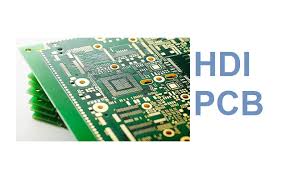
How Flexible Printed Circuit Manufacturers Innovate in Their Field
The manufacturing process of a flexible printed circuit manufacturers begins with designing the layout on a computer-aided design (CAD) system. Then, the design is transferred to the substrate surface through photolithography. This involves applying a layer of photoresist material to the substrate surface, which is then exposed to UV light through a photomask that contains the desired circuit pattern. After the exposure, the photoresist is removed and the conductive model is etched on the substrate surface to create a double-sided or single-sided flex circuit.
Once the conductive model is finished, the surface of the flexible circuit board is covered with a layer of non-conductive or insulating material to protect the copper model from damage. Next, a layer of solder mask is applied to the conductive model to protect it during the soldering process. Finally, a protective layer is placed over the solder mask to prevent it from being damaged or scratched during handling and assembly.
A key component of the manufacturing process is thorough testing. This helps to identify faults early and correct them before the final product is deployed. It also helps to reduce production costs and improve overall quality.
In order to stay ahead of the competition, flexible circuit manufacturers must continually innovate in their field. One of the best ways to do this is by collaborating with suppliers and identifying cost-effective materials that balance performance and affordability. Another way to reduce costs is by standardizing designs and components. Finally, utilizing processes such as roll-to-roll manufacturing can significantly lower unit costs.
As flexible circuits are becoming more and more popular, manufacturers must remain attentive to how these advances impact both their immediate projects and broader market trends. Incorporating flexible circuitry where it is appropriate and relying on rigid circuit boards where necessary will help them to stay at the forefront of technological advancements. By doing so, they will be able to provide customers with cutting-edge electronic solutions that address their needs for functionality and reliability. By embracing the versatility offered by custom flex circuitry, manufacturers can make products that are not only more compact and versatile but more affordable as well.