How do you test a rigid flex board?
test a rigid flex board
Rigid flex is an advanced circuit board design that combines the best features of both rigid and flexible boards to create a compact, lightweight, and durable electronic product. It is used in special applications, including foldable wearable electronics that monitor vital signs and health, conformal heating elements, and medical devices. Rigid-flex circuits provide thermal stability, reliability, and signal integrity, while lowering system costs and assembly time.
The complexity of rigid-flex designs presents unique challenges when it comes to manufacturing and testing, which require specialized equipment and procedures. For instance, there are more layers and dimensional constraints involved than in conventional printed circuit boards, which makes the assembly of rigid-flex PCBs more challenging than standard assemblies. Furthermore, the flex section of the board must be properly terminated to avoid splice failures.
Fortunately, there are several ways to improve the quality of rigid flex board and ensure their reliability. These include using the appropriate materials and ensuring all of the necessary processes are performed correctly during fabrication. A thorough inspection of the completed circuit board is also critical. This can help identify and address issues that could lead to future mechanical reliability problems.
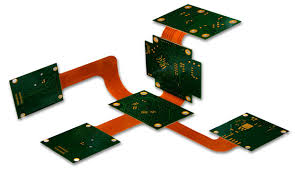
How do you test a rigid flex board?
To reduce the amount of stress on the flex section of a rigid-flex PCB, designers should limit the number of signal layers and minimize the size of the flex area as much as possible. They should also use circular sections for splices and cutouts, which will prevent tearing at the corners. In addition, they should consider adding stiffeners to areas that are subject to high pressures or bending.
Another way to improve the durability of a rigid-flex circuit board is by testing it for stress and bending. The flex section of the circuit board can be tested for stress by applying an electric current at different voltage levels and measuring the results with a multimeter. The results from this test will indicate if the board can sustain a bending load or not.
A rigid-flex circuit board can also be tested for its resistance to environmental hazards by exposing it to electrostatic discharge (ESD) and electromagnetic pulse (EMP) damage. It can also be tested for moisture resistance, which will determine how well the circuit board can resist water and humidity damage.
In order to pass this test, the circuit board must meet IPC-TM-650257 requirements. The test specimen must be placed in an oven at a temperature of 288+-5degC for a period of 30+/-0 seconds. Afterward, it must be allowed to cool to room temperature before undergoing the voltage withstand test.
Rigid-flex PCBs present unique challenges that require careful deliberation and mastery to overcome. However, as technology advances and consumers continue to demand more compact, resilient, and trustworthy electronics solutions, they will likely remain an important option for manufacturers of consumer and commercial products. As a result, designers will need to continue to use rigid-flex boards as they explore new and innovative uses for this versatile technology. By implementing proper design techniques, rigid-flex circuits can deliver the reliability and functionality required in today’s most demanding applications.