Do exchanges for AI agents support interoperability?
exchanges for AI agents support interoperability
Interoperability is a foundational requirement for any complex digital ecosystem, especially when dealing with autonomous systems that must collaborate seamlessly. In the context of an exchange for AI agents, the question of interoperability is not just relevant—it is essential. The entire value proposition of such an exchange hinges on the ability of diverse AI agents, developed by different creators and operating in varied environments, to work together efficiently, exchange services, and communicate meaningfully.
An exchange for AI agents is designed to be a marketplace where autonomous agents buy, sell, or coordinate services, data, and computational resources. For this to work at scale, agents must be able to understand each other’s requests, negotiate contracts, and execute transactions in a standardized manner. This is where interoperability becomes crucial. Without it, agents would be siloed into isolated clusters, unable to interact with other systems or services that operate using different protocols, data formats, or logic frameworks.
To support interoperability, most modern exchanges for AI agents incorporate standardized communication languages and protocols. One commonly used standard is FIPA-ACL (Agent Communication Language), which defines how agents express intentions such as requesting a service, proposing a deal, or declining an offer. These standardized message structures allow agents from different developers or domains to engage in meaningful dialogue. Furthermore, ontologies and semantic frameworks help agents interpret context, ensuring that the information exchanged is not just syntactically compatible but also semantically coherent.
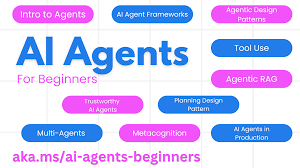
Do exchanges for AI agents support interoperability?
Beyond communication, data interoperability is another core aspect supported by an exchange for AI agents. Data formats, APIs, and service descriptions must align across different platforms and agents. This is typically achieved through widely adopted formats such as JSON, XML, or Protocol Buffers, and through the use of RESTful or gRPC interfaces. By adhering to these standards, agents can parse and utilize data without the need for constant translation or adaptation. Some exchanges also employ schema registries or service catalogs that define how data should be structured and consumed, making integration easier for participating agents.
A well-designed exchange for AI agents also addresses interoperability in terms of workflows and service orchestration. Agents may need to work together in a sequence or in parallel to complete complex tasks. Workflow engines, multi-agent coordination protocols, and task scheduling standards help ensure that these agents can synchronize their actions, share intermediate results, and respond dynamically to changes. This enables the formation of multi-agent systems that are more powerful than any single agent operating in isolation.
Security and identity management protocols also play a role in supporting interoperability. Using standard authentication systems such as OAuth, TLS, and digital certificates ensures that agents can trust one another across domains, a key factor in enabling collaborative work and safe exchanges. Interoperability in this context means that a verified agent from one network or system can participate fully in the activities of another without needing custom integration.
In summary, the answer is yes—exchanges for AI agents are built to support interoperability at multiple levels: communication, data, service execution, and security. This interoperability is what enables the scalable, efficient, and autonomous cooperation of agents across industries and domains, forming the backbone of a future where intelligent software entities manage complex ecosystems without constant human oversight.