‘Ahimsa : 100 reflections on the Harappan Civilization’ book review: Of our non-violent ancestors
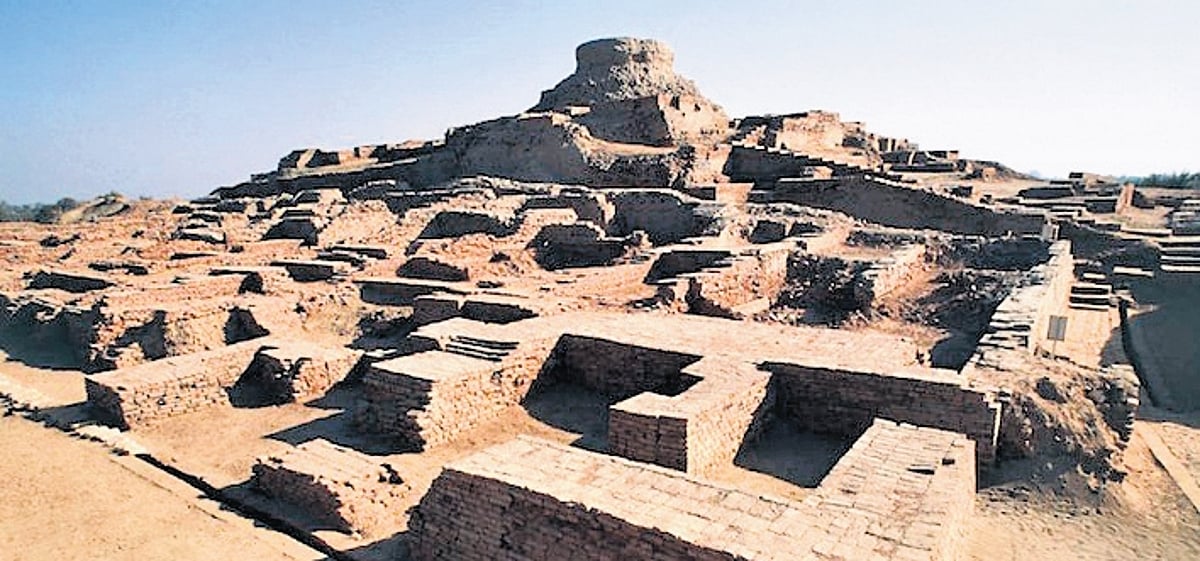
The Harappan civilisation, or Indus Valley Civilisation (IVC), has always fascinated historians for its urban planning and somewhat organised lifestyle and trade, without any known depiction of war or violence.
Does this make them the first non-violent civilisation? According to Devdutt Pattanaik, a renowned mythologist and writer, it does. In his latest book, Ahimsa: 100 Reflections on the Harappan Civilization, Pattanaik departs from his image of a mythology writer to offer insightful reflections on Harappan civilisation.
In September 2024, John Marshall, Director General of the Archaeological Survey of India, told the world about Harappan Civilisation. Although the existence of a civilisation as ancient as Mesopotamia and as grand as Egypt was in itself a great moment, a lot of things remained a mystery. One of the mysteries was the peaceful nature of this civilisation.
There was no sword or even artwork of war/violence found in Harappan Civilisation. Pattanaik says, “Two tiny artworks, found in two distant cities, Mohenjo-daro and Kalibangan, depict two humans fighting. In each case, a woman stands between them.”
He adds, “Sumerian (another Bronze Age civilisation in the historical region of southern Mesopotamia) artworks glorify war. Such artwork is not found in Harappa. When two humans fight, there is always a woman between them.”
A unicorn was found in almost 80 per cent of the 2,000 stamp seals from the Harappa. This unicorn is shown sniffing perfume from an incense burner. “Perhaps the Unicorn was the symbol of horned hermits of Harappa who manage inter-clan and inter-city affairs.”
This assumption that people from the Harappan civilisation followed monasticism feels convincing to an extent. Pattnaik through archaeological discoveries and details known so far sounds content that perhaps the lifestyle of the Harappan Civilisation has a huge impact on various cultures and religions.
It’s not difficult to assume that Harappans would have been supportive of hermit life, renouncing hoarding and no traces of war and romance. However, there are images of rivalries.
This book is not a historical account, and for readers some reflections may feel a bit of a stretch. In fact, Pattanaik does not claim them to be all verified historical arguments. “These are reflections, based on frameworks that I have developed to better understand various Indian and Western mythologies.